

Looking for complete information about the MBBS in Philippines Admission Process 2026? This guide explains eligibility, NEET requirements, university selection, admission procedures, fees, visa process, and everything Indian students need to know before applying for medical education in the Philippines.
With English-medium education, affordable tuition fees, practical clinical exposure, and a welcoming environment for international students, the Philippines has become a preferred destination for aspiring doctors.
But before you pack your bags, it’s important to understand how the admission process works. Unlike India, the medical education pathway in the Philippines follows a different structure, and knowing the steps in advance can save you time, money, and unnecessary stress.
In this guide, we’ll walk you through the complete MBBS in Philippines Admission Process 2026 in a simple and easy-to-understand way.
Why Are Indian Students Choosing the Philippines?
The Philippines has earned a strong reputation among Indian students for several reasons:
✅ English is the primary language of instruction
✅ Affordable tuition fees compared to many other countries
✅ Hands-on clinical training and hospital exposure
✅ Student-friendly environment
✅ Internationally recognized medical education
✅ Lower living costs compared to many Western countries
For students looking for quality education without an overwhelming financial burden, the Philippines can be a practical option.
First, Understand the MBBS Structure in the Philippines
One of the biggest mistakes students make is assuming that the Philippine medical system works exactly like India’s MBBS program.
In reality, medical universities in the Philippines generally award a Doctor of Medicine (MD) degree.
The journey usually looks like this:
- Complete the required pre-medical pathway
- Meet medical school admission requirements
- Qualify necessary entrance requirements
- Join the Doctor of Medicine (MD) program
- Complete clinical rotations
- Finish internship training
- Fulfill licensing and registration requirements
That’s why understanding the course structure before admission is extremely important.
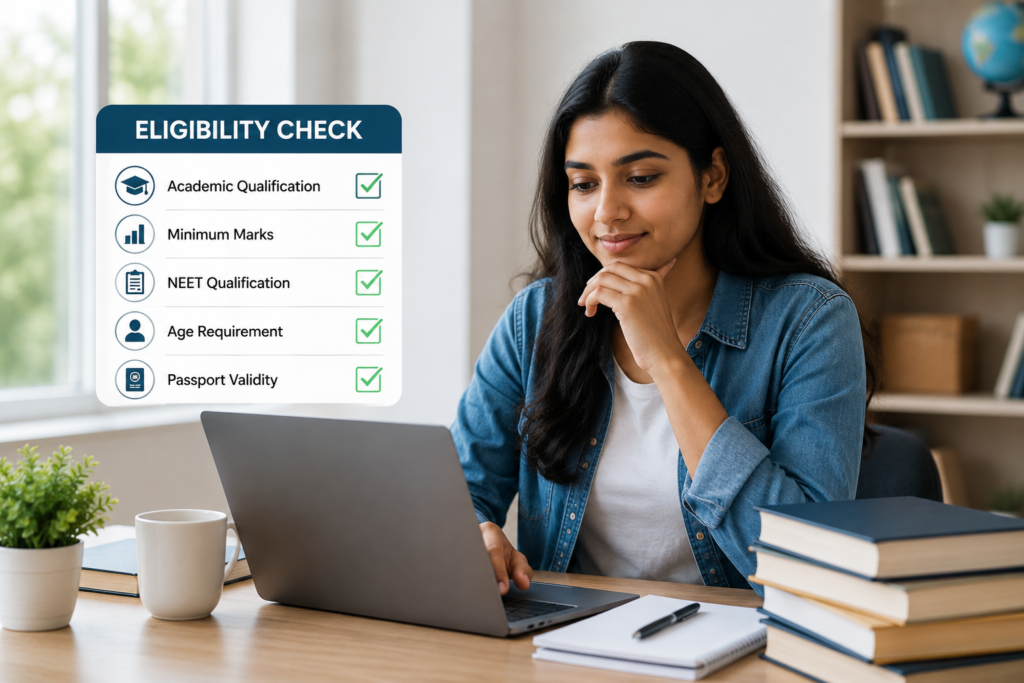
Step 1: Check Your Eligibility
Before applying to any university, make sure you meet the basic requirements.
Generally, Indian students should have:
- Completed Class 12
- Studied Physics, Chemistry, Biology, and English
- Required PCB percentage as per applicable rules
- A valid passport
- Necessary academic documents
If there are any errors in your certificates, such as spelling mistakes in your name or incorrect dates of birth, get them corrected early.
Trust us small document issues can become major headaches later.
Step 2: Qualify NEET
If you plan to return to India and pursue your medical career here, NEET qualification is extremely important.
Many students focus only on getting admission abroad and forget about future registration requirements.
Keep the following documents safely stored:
- NEET Scorecard
- NEET Admit Card
- Application Details
- Valid Identity Proof
A little organization now can save a lot of trouble later.
Step 3: Understand the BS–MD Pathway
This is one area where students often get confused.
Unlike India’s direct MBBS route, the Philippines generally follows a BS–MD pathway.
Before enrolling, ask the university:
- What is the pre-medical course?
- How long is it?
- What subjects are included?
- What qualification will I receive?
- Does it lead to MD admission?
Never rely solely on verbal promises.
Always ask for written details.
Step 4: Verify Everything Carefully
Choosing a university is a major decision, so don’t rush.
Before finalizing admission, check:
- Course duration
- Subjects offered
- Clinical training opportunities
- Internship structure
- Medium of instruction
- Registration eligibility
If someone says:
“Don’t worry, everything is approved.”
Ask them to show official documentation.
A genuine institution will always be transparent.

Step 5: Research Universities Thoroughly
Every university has its own strengths.
Instead of selecting the first option you find online, compare multiple universities based on:
Academics
- Faculty quality
- Curriculum
- Student support
Clinical Exposure
- Hospital affiliations
- Patient interaction opportunities
- Practical training
Student Life
- Accommodation facilities
- Campus environment
- Safety
Cost
- Tuition fees
- Hostel fees
- Living expenses
A cheaper university isn’t always the better choice.
Focus on overall value.
Step 6: Understand the Real Cost
Many students get attracted by advertisements showing low starting fees.
But that’s only part of the picture.
Ask for a complete fee breakdown, including:
- Tuition fees
- Admission fees
- Laboratory charges
- Examination fees
- Hostel fees
- Food expenses
- Insurance
- Visa costs
Create a realistic budget before making a commitment.
Financial planning is just as important as academic planning.
Step 7: Gather Your Documents Early
Preparing documents at the last minute creates unnecessary stress.
Start collecting:
- Class 10 Certificate
- Class 12 Certificate
- Passport
- NEET Scorecard
- Passport-size photographs
- Birth Certificate
- Medical Reports
- Financial Documents
Keeping everything organized will make the application process much smoother.
Step 8: Submit Your Application Carefully
When filling out university forms:
- Use your passport name exactly
- Double-check all academic information
- Upload clear copies of documents
- Provide active contact details
Even small mistakes can delay admission processing.
Take your time and review everything before submission.
Step 9: Prepare for Interviews
Some universities may conduct interviews or assessments.
Don’t be nervous.
Most institutions simply want to understand:
- Why you want to become a doctor
- Why you chose the Philippines
- Your future goals
- Your understanding of the course structure
Be honest and confident.
There’s no need to memorize complicated answers.
Step 10: Review Your Admission Letter
Receiving an admission letter is exciting, but don’t get carried away.
Read every detail carefully.
Verify:
- University name
- Campus name
- Program details
- Fee structure
- Course duration
- Payment deadlines
If anything looks different from what was promised, seek clarification immediately.
Step 11: Make Payments Safely
Only pay through official university-approved channels.
Before transferring money:
- Verify bank details
- Ask for official receipts
- Understand refund policies
- Save all payment records
Never transfer large amounts to personal accounts without proper verification.
Step 12: Complete Visa Formalities
Once your admission is confirmed, begin the visa process.
Typical requirements may include:
- Passport
- Admission Letter
- Academic Documents
- Medical Certificates
- Financial Proof
Follow the latest instructions provided by your university and relevant authorities.
Starting early can help avoid last-minute delays.
Step 13: Plan Your Travel and Accommodation
Before departure, confirm:
- Hostel arrangements
- Airport pickup options
- Reporting dates
- Orientation schedules
- Emergency contacts
Being prepared will help you settle into your new environment comfortably.
Step 14: Register After Arrival
After reaching the Philippines, you’ll usually need to:
- Submit original documents
- Complete registration procedures
- Attend orientation sessions
- Receive student identification
- Finalize accommodation arrangements
Keep copies of every document and receipt throughout your academic journey.
Common Mistakes Students Should Avoid
Over the years, many students have faced challenges because of simple mistakes.
Avoid:
❌ Choosing a university only because it’s cheap
❌ Ignoring NEET requirements
❌ Believing marketing claims without verification
❌ Skipping research
❌ Not understanding the course structure
❌ Paying fees without proper documentation
❌ Ignoring internship and licensing details
A little extra research today can save years of regret later.
Quick Admission Checklist for 2026
Before confirming admission, make sure you have checked:
✔ Eligibility Requirements
✔ NEET Qualification
✔ Passport Validity
✔ University Accreditation
✔ Course Structure
✔ Clinical Training Opportunities
✔ Internship Details
✔ Fee Structure
✔ Refund Policies
✔ Visa Requirements
✔ Accommodation Arrangements
✔ Written Documentation
Why Students Trust Arka Edutech
Choosing the right medical university can feel overwhelming, especially when there are so many options available.
At Arka Edutech, we help students and parents make informed decisions with transparent guidance and personalized support.
Our assistance includes:
- Eligibility Assessment
- University Selection
- Application Support
- Documentation Assistance
- Visa Guidance
- Budget Planning
- Pre-Departure Support
- Accommodation Assistance
Our goal is simple: help students choose the right path with clarity and confidence.
Final Thoughts
The MBBS in Philippines Admission Process 2026 may seem complicated at first, but with the right guidance and proper planning, it becomes much easier to navigate.
Take your time to research universities, understand the BS–MD pathway, verify every detail, and keep your documents organized. The more informed your decisions are today, the smoother your medical journey will be tomorrow.
Your dream of becoming a doctor starts with making the right choices—and the first step is understanding the admission process thoroughly.